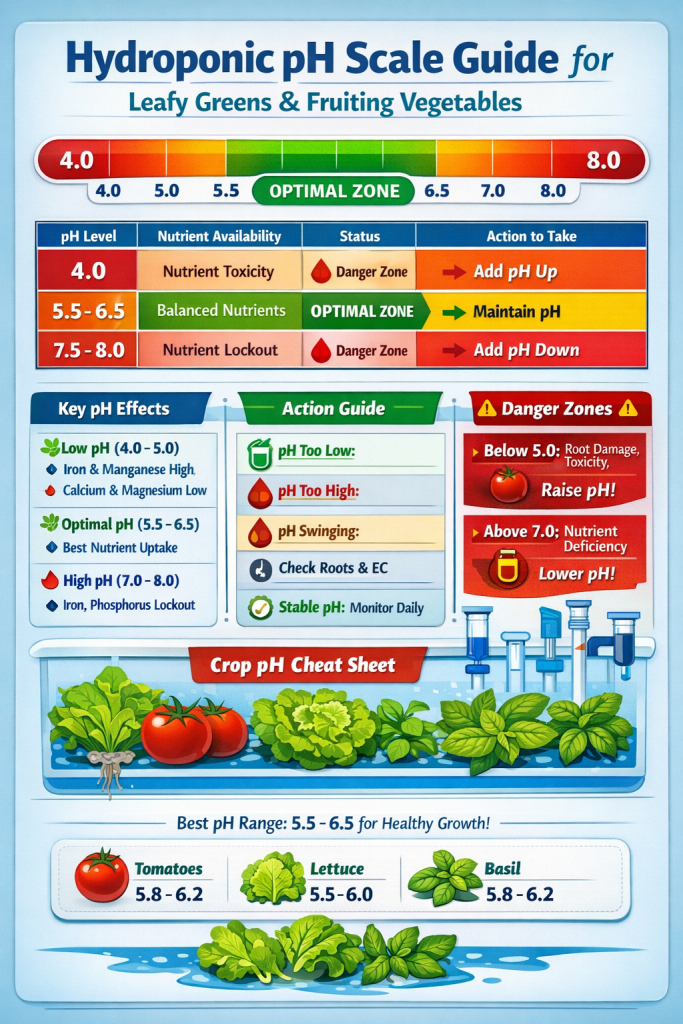
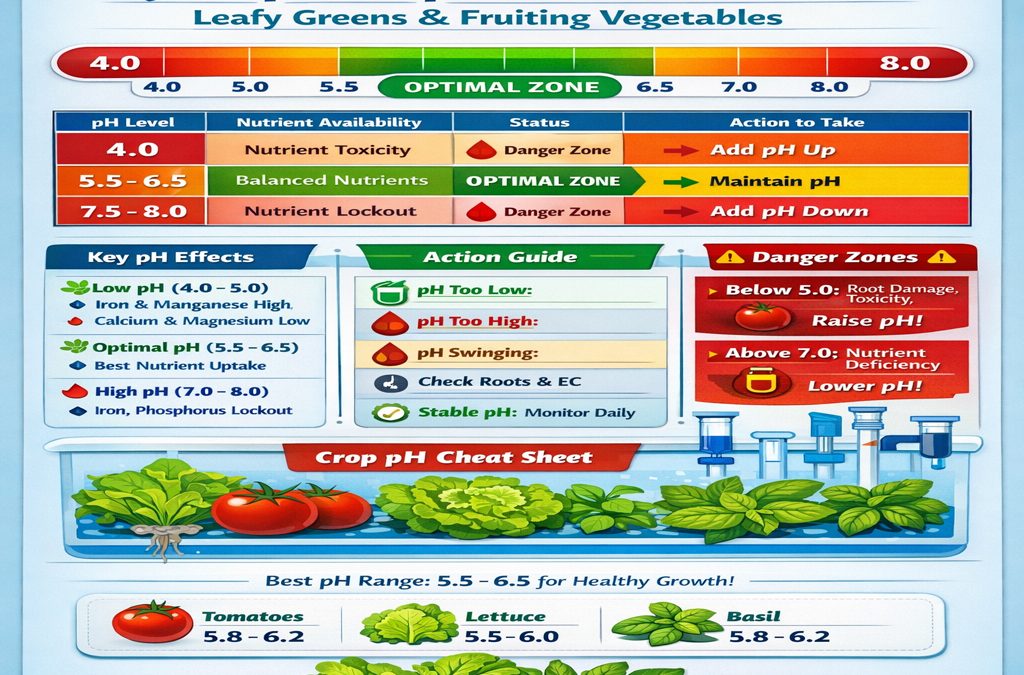
Here is a professional, grower-level pH management guide designed for direct use in your hydroponic system. It is specifically tailored for both leafy greens and fruiting crops such as lettuce, basil, and tomatoes, helping you maintain optimal nutrient uptake and consistent plant health. Proper pH balance is essential in hydroponics because it directly affects how efficiently plants can absorb key nutrients from the nutrient solution. This guide provides practical, crop-specific targets to help prevent deficiencies, lockouts, and growth issues. By following these recommendations, growers can stabilize their system more effectively, improve overall plant vigor, and support stronger, higher-yield production throughout both vegetative and fruiting stages.
🌱 Hydroponic pH Scale Guide (4.0 – 8.0)
| pH Level | Nutrient Availability | Status | What’s Happening | Action to Take |
| 4.0 | Almost all nutrients overly soluble; calcium & magnesium unstable | 🔴 Danger Zone | Root damage likely, nutrient toxicity | Immediately add pH Up, flush system |
| 4.5 | Iron, manganese very high; Ca/Mg still low availability | 🔴 Danger Zone | Toxicity risk, poor root health | Add pH Up, inspect roots |
| 5.0 | Micronutrients high; calcium slightly limited | ⚠️ Low Zone | Early imbalance | Slowly raise pH |
| 5.5 | Excellent balance of micro + macro nutrients | 🟢 Optimal Zone | Ideal uptake begins | Maintain, monitor daily |
| 6.0 | Peak availability for most nutrients | 🟢 Optimal Zone | Best overall growth | Maintain stability |
| 6.5 | Slight drop in iron; still strong nutrient uptake | 🟢 Optimal Zone | Ideal for fruiting crops | Maintain or slightly lower if needed |
| 7.0 | Iron, manganese, phosphorus start locking out | ⚠️ High Zone | Nutrient deficiencies begin | Add pH Down |
| 7.5 | Major micronutrient lockout | 🔴 Danger Zone | Yellowing (chlorosis), slow growth | Add pH Down, check reservoir |
| 8.0 | Severe lockout of iron, phosphorus, manganese | 🔴 Danger Zone | Plants cannot absorb key nutrients | Immediately lower pH, flush if needed |
🧪 Key Nutrient Behavior by pH
- Low pH (4.0–5.0)
- Too much: Iron, manganese
- Not enough: Calcium, magnesium
- Risk: Root burn, toxicity
- Optimal pH (5.5–6.5)
- Balanced availability of:
- Nitrogen (N)
- Phosphorus (P)
- Potassium (K)
- Calcium (Ca)
- Magnesium (Mg)
- Micronutrients
- Balanced availability of:
- High pH (7.0–8.0)
- Locked out: Iron, manganese, phosphorus
- Symptoms: Yellow leaves, weak growth
🎯 Optimal Zone (5.5 – 6.5)
✅ Best range for most hydroponic crops
- Maximizes nutrient absorption
- Prevents deficiencies and toxicities
- Supports strong root development
Pro Tip:
Let pH drift slightly (5.5 → 6.2) instead of holding one exact number — this helps plants access a wider range of nutrients.
⚠️ Danger Zones
🔴 Low Danger (Below 5.0)
- Root stress and nutrient toxicity
- Calcium deficiency likely
- Fix: Add pH Up (potassium hydroxide)
🔴 High Danger (Above 7.0)
- Nutrient lockout (especially iron)
- Common symptom: yellow leaves
- Fix: Add pH Down (phosphoric acid)
🛠️ Action Guide (Quick Reference)
| Situation | What to Do |
| pH dropping daily | Check for root disease or microbial activity |
| pH rising daily | Plants consuming nutrients → adjust with pH Down |
| Sudden pH swings | Check EC, reservoir cleanliness |
| Persistent imbalance | Flush system + remix nutrients |
🔍 Expert Tips
- Always adjust pH after mixing nutrients
- Measure pH daily (twice daily for precision growing)
- Calibrate your pH meter weekly
- Temperature affects pH — warm water = more fluctuation
- Keep reservoir clean to prevent biological drift